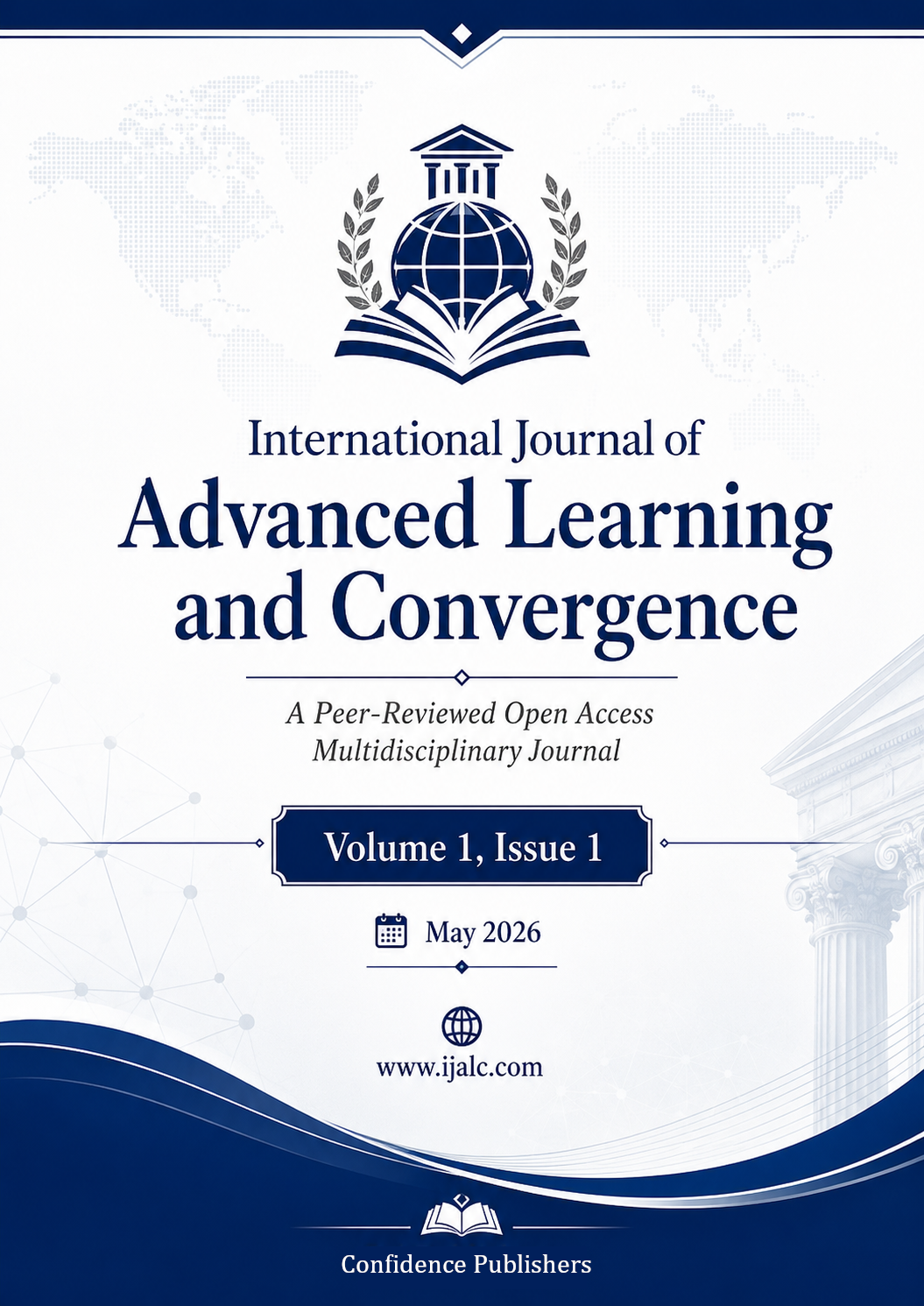
Technology and Electronic Media Use in Education: Patterns, Predictors, and Effects on Learning Outcomes and Digital Well-Being among Higher Secondary School Students in Kerala
Keywords:
Active Academic Media Use, Digital Literacy, Non-Academic Screen Time, Academic Achievement, Digital Well-Being, Educational Technology, Higher Secondary EducationAbstract
This study examined whether Active Academic Media Use (AAMU), Digital Literacy (DL), and Non-Academic Screen Time (NAST) predict Academic Achievement (ACH) and Digital Well-Being (DWB) among higher secondary school students in Kerala. A cross-sectional survey design was employed with a sample of 384 students. Measures included a seven-day time-use diary for AAMU and NAST, the 25-item Student Digital Literacy Scale (SDLS-25), the 25-item Digital Well-Being Scale (DWB-25), and ACH drawn from school records. Data analysis was conducted using EDUSTAT software. Multiple linear regressions addressed two research questions: whether the three technology-use variables jointly predict ACH and DWB. Findings indicated that greater AAMU and higher DL were associated with higher ACH and better DWB, whereas higher NAST was associated with lower scores on both outcomes. The results highlight the importance of building students’ digital literacy and increasing the academic share of media use while bounding leisure screen time. Implications for classroom practice, school policy, and parental guidance are discussed.
Downloads
Published
Issue
Section
License
Copyright (c) 2026 The Author(s)

This work is licensed under a Creative Commons Attribution 4.0 International License.
Authors retain copyright of their published work and grant the International Journal of Advanced Learning and Convergence the right of first publication.
Articles published in this journal are licensed under the Creative Commons Attribution 4.0 International Licence (CC BY 4.0). This licence permits use, sharing, distribution, reproduction, and adaptation in any medium or format, provided that appropriate credit is given to the original author(s), the source is cited, and a link to the licence is provided.
Licence URL: https://creativecommons.org/licenses/by/4.0/